Improving system trust
Fixing system trust in a compliance platform
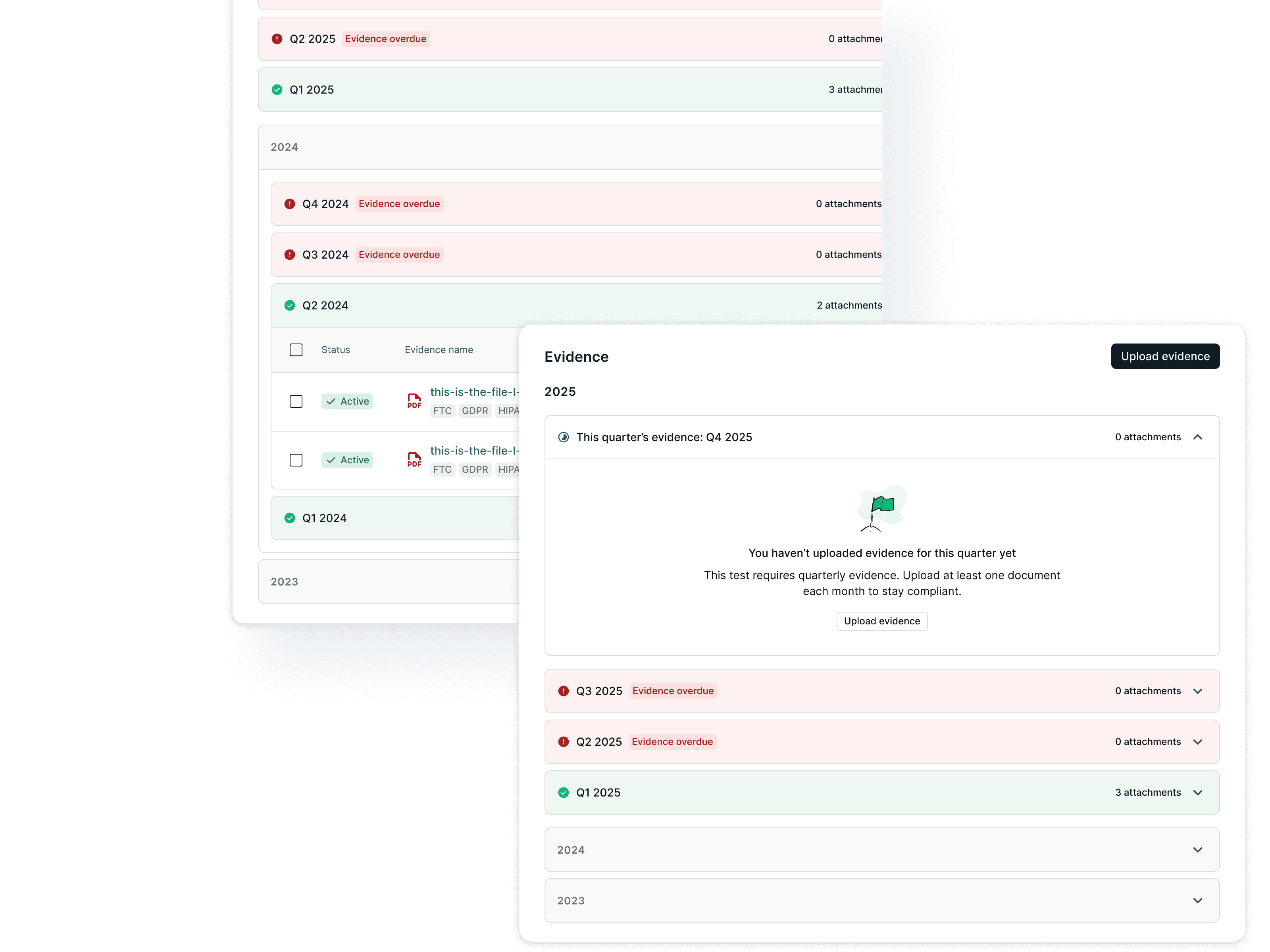
Secureframe helps companies prove they meet security and compliance requirements through tests that show whether required work is complete and up to date.
When a test is marked as “passing,” customers trust that it reflects reality.
But because many tests depend on time, a core system flaw allowed some to remain “passing” even after the underlying work had expired — creating false confidence and causing issues to surface only during audits, when it was often too late to fix them.
Background
Secureframe tracks compliance through tests that rely on uploaded proof. For many of these tests, validity depends on when the activity happened, not when evidence was uploaded.
When configured correctly, tests clearly show whether required work is current.
When misconfigured or left unconfigured, the system can quietly drift out of sync with reality.
Timeline
Multi-phase rollout across core platform
The Team
1 PM, 1 Designer (me), 1 Engineer, Compliance stakeholders
My Role
I led end-to-end design across problem framing, system modeling, and phased execution, partnering closely with product and engineering to correct a foundational platform issue without disrupting active customers or audits.
I mapped the system end-to-end to understand why “passing” could drift so far from reality. That analysis surfaced three root causes:
Missing defaults
If a customer uploaded evidence without setting an expiration, the test never expired.
Wrong source of truth
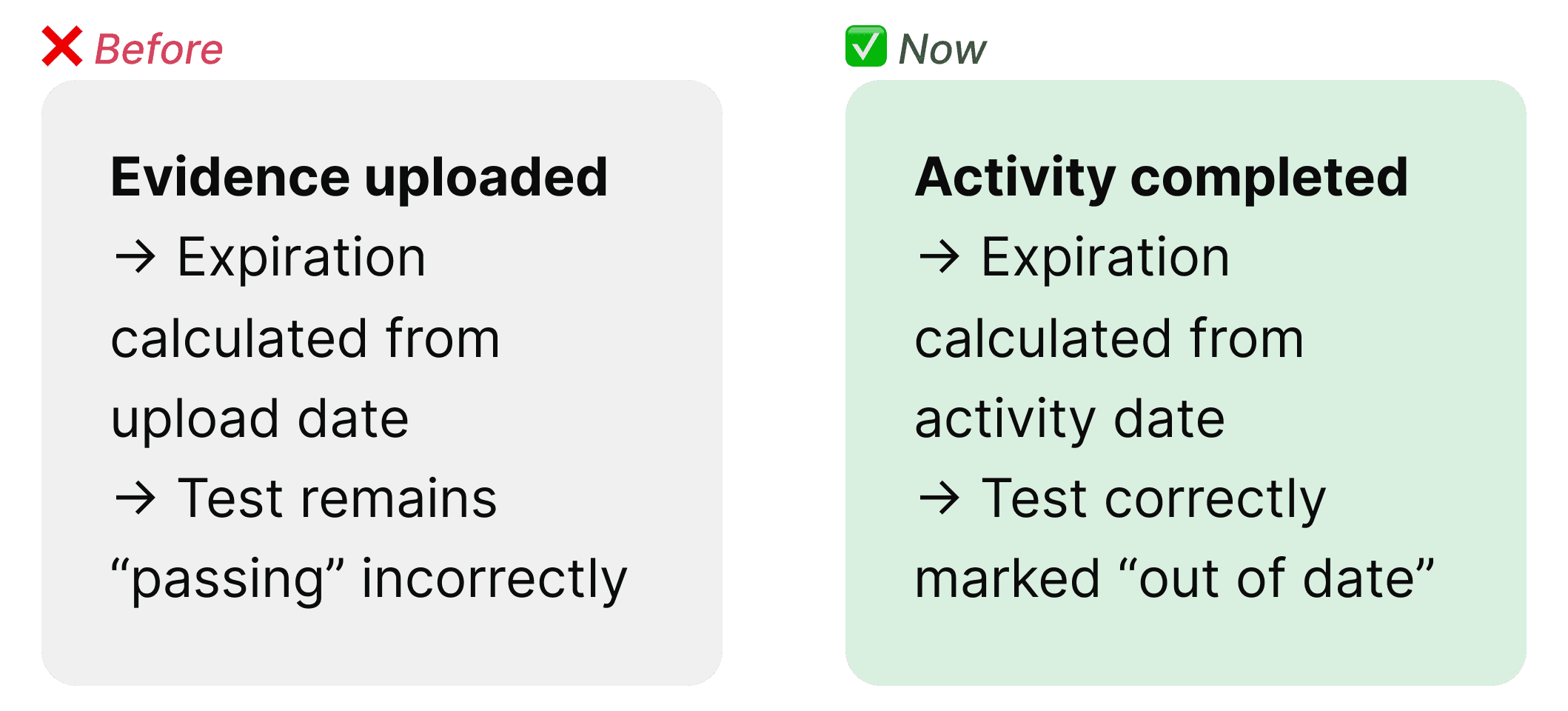
Expiration was calculated from upload time rather than when the real-world activity occured.
Conflicting audit behavior
When work expired, the system archived records in a way that removed them from audit views, exactly when they were needed most.
The system was technically behaving as designed, but the design itself was unsafe at scale.
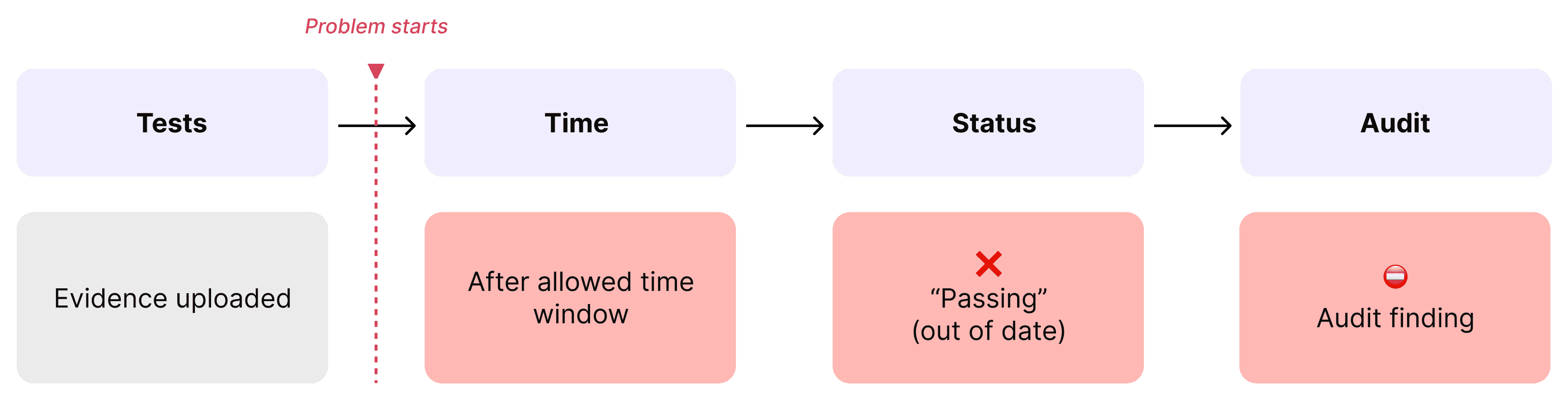
This wasn’t a theoretical edge case, it was actively impacting customers preparing for audits.
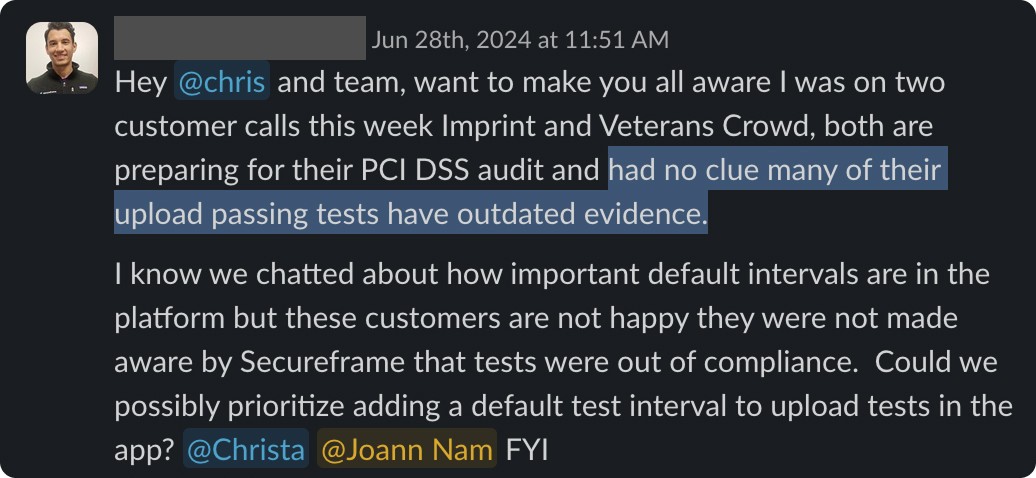
Internal escalation that helped prioritize fixing default expiration behavior.
Before touching the UI, I made a deliberate call to fix system correctness first.
My guiding principle was simple:
A system that communicates status must be correct by default — even when users forget steps or make mistakes
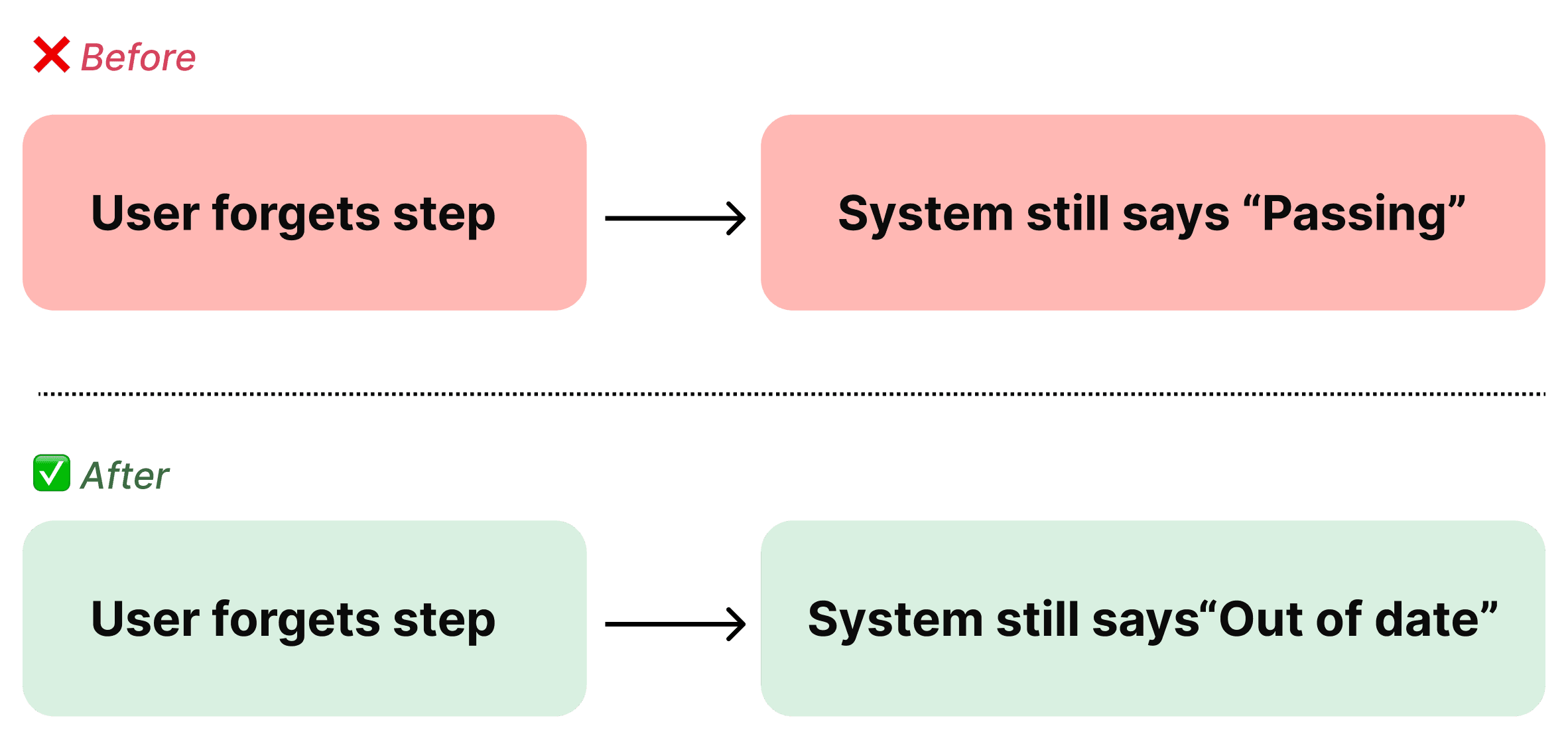
To move quickly without compromising trust, we shipped this work in phases, fixing correctness first, then layering in safer defaults and clarity to reduce risk.
Phase 1: Fix the logic
Correct the system’s source of truth.
Prevent expired work from being hidden during audits
Introduce a clear “out of date” state instead of silent archiving
Calculate expiration using activity completion date, not upload time
Phase 2: Make the safe path the default
Make safety the default, not a setup step.
Every time-sensitive test has an expiration by default
Existing customer configurations are preserved
Tests can no longer remain valid forever by accident
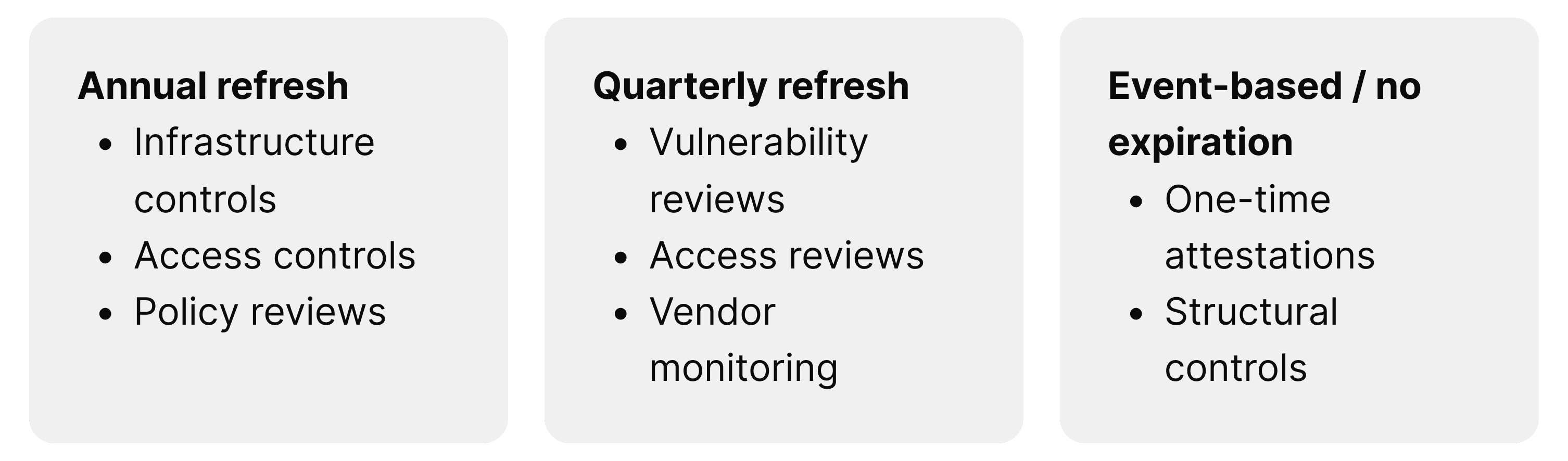
Default intervals were defined in partnership with compliance to reflect real-world risk and audit expectations.
Phase 3: Improve clarity
Use correctness as a foundation for better UX.
With the system behaving correctly by default, I focused on making that behavior clear and predictable for users.
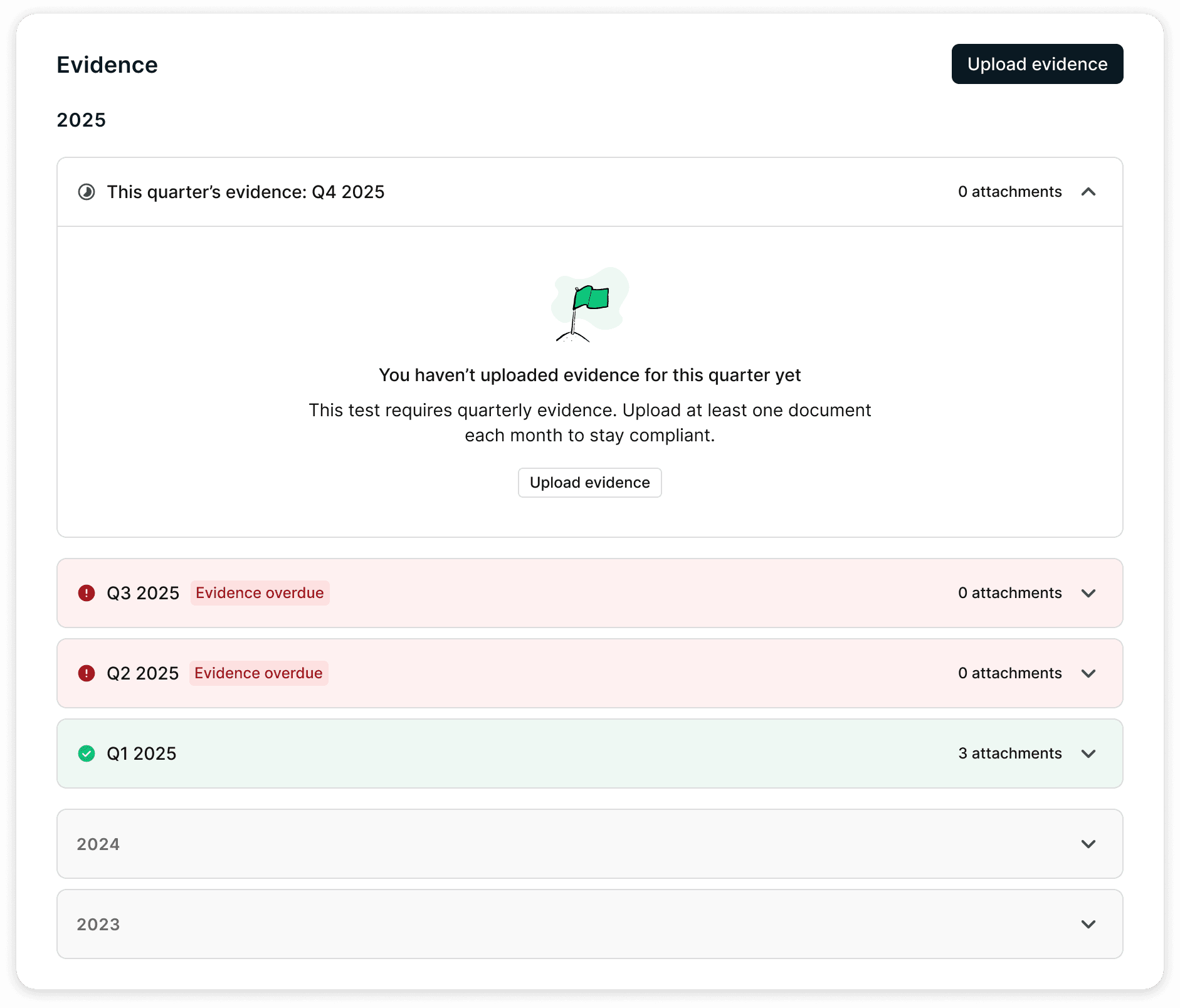
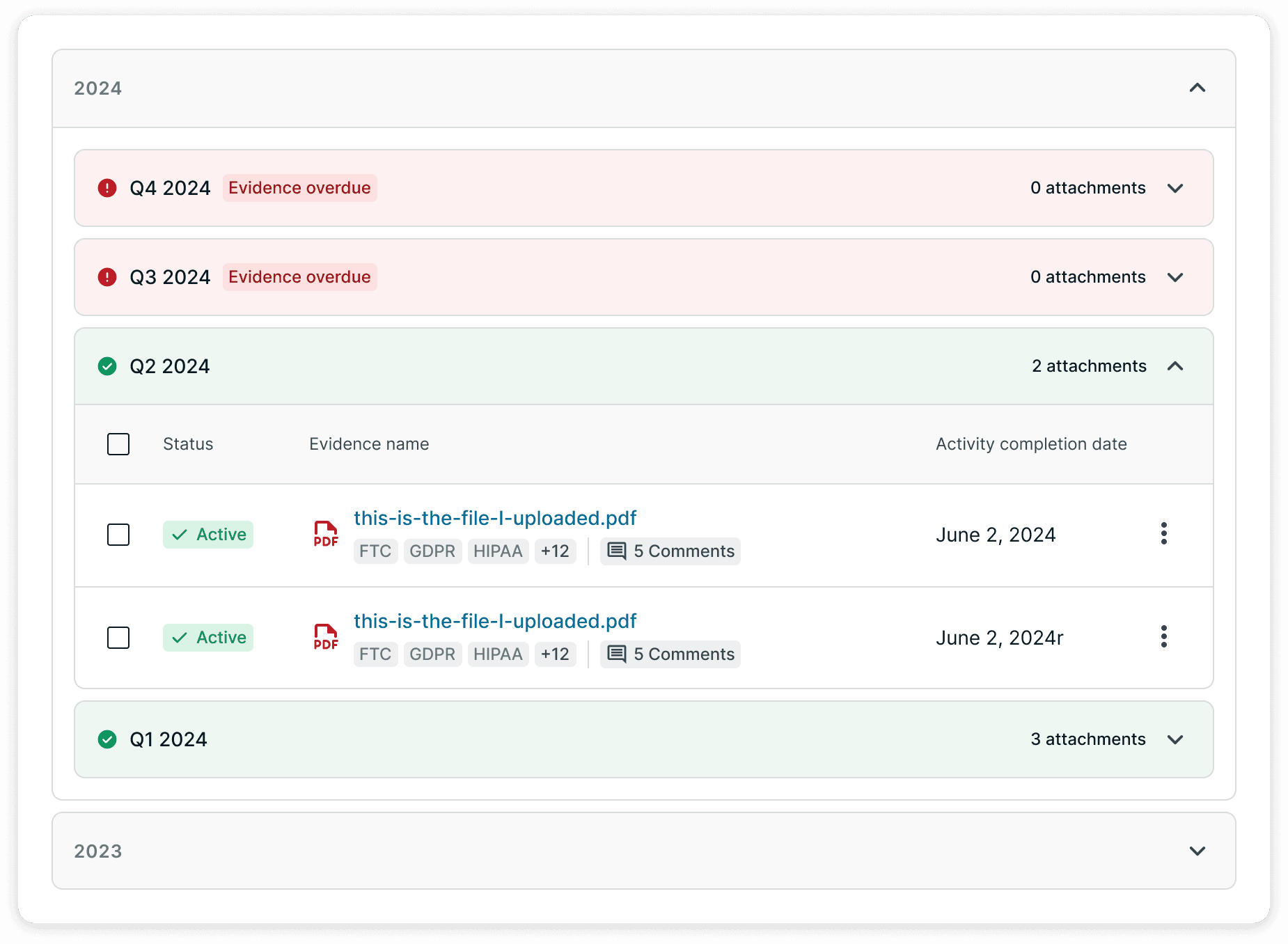
What users can now see at a glance:
Current quarter clearly identified
Past compliance remains visible
Overdue evidence no longer hidden
Because this change touched core platform correctness and active audits, I partnered closely with product, engineering, and compliance to validate the rollout. We initially released the change through an early-access cohort to reduce risk before rolling it out broadly.
I specifically validated that:
Active audits retained all historical records
Customers with custom configurations were unaffected
Tests now expired predictably based on activity completion
This allowed us to ship confidently without breaking trust.
This work removed an entire class of system failure.
100% of time-sensitive tests now expire correctly by default
Tests can no longer stay "passing" indefinitely due to missing configuration
Audit-time surprises caused by outdated or missing records were eliminated at the system level
Fixing correctness solved the trust problem, but surfaced a new one:
Users still struggled to understand when work was due or overdue
This reinforced an important lesson for me:
Correct systems are necessary, but not sufficient. Clarity and guidance must follow.
This project wasn’t about intervals.
It was about ensuring the product could never quietly misrepresent reality, especially during high-stakes moments like audits.
By fixing the system at its core, I helped Secureframe move closer to being a product customers can trust without second-guessing.